
You spent time building your business, creating a recognizable brand, and launching your website. Your domain name is printed on business cards, appears in marketing materials, and helps customers find you online.
But what if someone registered a domain that’s almost identical to yours?
It happens more often than many business owners realize. This practice, known as domain squatting, can confuse customers, damage your reputation, and even create security risks for your business.
The good news is that there are steps you can take to protect your brand before it becomes a problem. Understanding what domain squatting is, and how to guard against it, is an important part of building a strong digital presence.
What Is Domain Squatting?
Domain squatting, sometimes called cybersquatting, occurs when someone registers a domain name that is associated with another business, brand, or trademark with the intention of benefiting from that business’s reputation.
In some cases, a person purchases the domain hoping to sell it back to the business for a profit. In others, the goal is to attract visitors who accidentally type the wrong website address. More concerning cases involve fake websites designed to collect personal information, impersonate legitimate businesses, or distribute malicious software.
Not every similar domain is registered with bad intentions. Some may belong to businesses with similar names operating in different industries or geographic locations. However, when a domain is intentionally created to take advantage of another company’s reputation or confuse customers, it becomes a much more serious issue.
How Domain Squatting Happens
Many businesses register one domain name and assume their brand is fully protected. Unfortunately, there are many ways someone can create a confusingly similar web address.
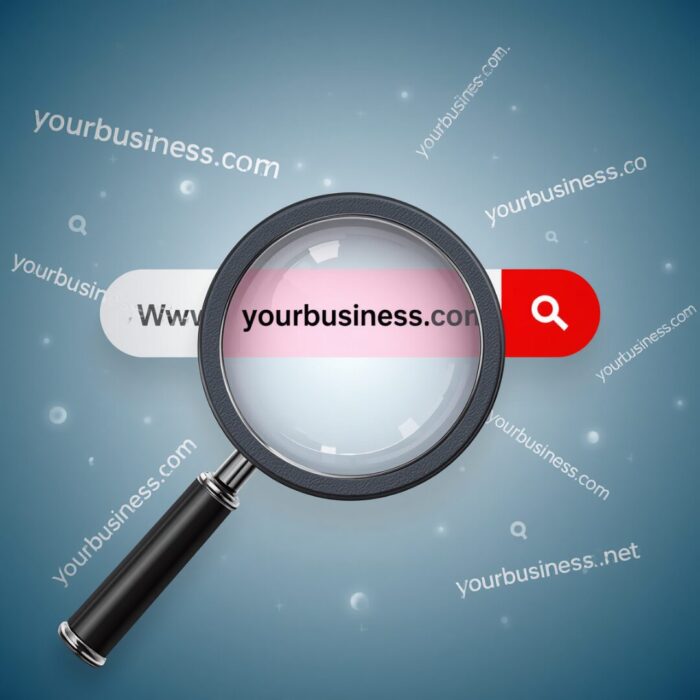
For example, imagine your business owns yourbusiness.com. Someone else might register:
- your-business.com
- yourbusiness.net
- yourbusiness.co
- yourbusines.com (missing a letter)
- yourbuisness.com (common misspelling)
At first glance, these addresses may look nearly identical. A customer typing quickly into their browser may not notice the difference until they’ve landed on the wrong website.
This type of “typosquatting” is one of the most common forms of domain squatting because it relies on simple human error.
Why Domain Squatting Matters
For many businesses, a website is more than an online brochure. It’s where customers schedule appointments, make purchases, submit inquiries, and learn about products or services.
If someone visits the wrong website because of a similar domain name, several problems can occur.
First, customer trust can be damaged. A visitor who lands on a low-quality or suspicious website may assume it belongs to your business. Even if they realize their mistake, the experience can leave them questioning your credibility.
Second, domain squatting can interfere with your marketing efforts. If customers are accidentally visiting another website instead of yours, you could lose leads, sales, or inquiries without realizing why.
Finally, some fraudulent websites are designed to impersonate legitimate businesses. These fake sites may attempt to collect login credentials, payment information, or other sensitive data through phishing scams. While your business may not be responsible for the fraudulent activity, customers often associate the experience with your brand.
Can Domain Squatting Affect SEO?
Domain squatting does not directly lower your search engine rankings, but it can create issues that indirectly affect your online visibility.
For example, if customers search for your business and find multiple similar domain names, they may become confused about which website is legitimate. That uncertainty can reduce clicks to your actual website and weaken customer confidence.
In some situations, competing websites with similar names may also create confusion in branded search results. While search engines work to deliver the most relevant results, businesses should make it as easy as possible for customers to recognize their official website.
Your domain name is an important part of your online identity, and protecting it helps maintain consistency across search engines, social media, email marketing, and digital advertising.
Signs Your Business May Be at Risk
Many business owners don’t realize there is a problem until a customer points it out.
You may want to investigate further if customers mention visiting the wrong website, receiving suspicious emails that appear to come from your business, or having trouble finding your official website online.
Businesses that have operated under the same name for many years, recently rebranded, or experienced significant growth may also become more attractive targets because their brand recognition has increased.
Even if no problems have surfaced yet, taking a proactive approach can help reduce future risks.
How to Protect Your Business From Domain Squatting
Protecting your online brand starts with a thoughtful domain strategy rather than simply registering one website address.
If available, consider securing common variations of your domain name, including popular extensions such as .net, .co, or .org, as well as common misspellings of your business name. These additional domains can often be redirected to your primary website, helping customers reach the correct destination regardless of which version they type.
It’s also important to keep your domain registration current. Accidentally allowing a domain to expire can create an opportunity for someone else to register it before you have a chance to renew it. Enabling automatic renewal and maintaining accurate contact information with your domain registrar can help prevent this from happening.
Regularly monitoring your online presence is another smart practice. Periodically search for your business name online and review search results for unfamiliar websites that closely resemble your brand. Monitoring tools and professional digital marketing partners can also help identify potential issues before they become larger problems.
Finally, make sure your customers know where to find you. Consistently using the same domain name across your website, email signatures, Google Business Profile, social media platforms, and marketing materials helps reinforce your official online presence and reduces confusion.
Why Domain Strategy Is About More Than a Website
Many businesses think of their domain as simply the address customers type into a browser. In reality, your domain is the foundation of your digital brand.
It influences your website, email communications, online advertising, local search visibility, customer trust, and overall credibility. A strong domain strategy helps ensure customers always know they’re interacting with your legitimate business.
As cyber threats become more sophisticated and online competition continues to grow, protecting your digital identity is just as important as protecting your physical business.
Build a Stronger Digital Foundation
Domain squatting isn’t something most business owners think about—until it affects them. By then, recovering a domain or repairing customer trust can be costly and time-consuming.
Taking a proactive approach today can help protect your brand tomorrow. From choosing the right domain strategy to monitoring your online presence and strengthening your website security, small steps now can prevent larger issues later.
At Branchleaf Digital, we help businesses build a stronger digital foundation through smart website strategy, domain management, and digital marketing solutions that support long-term growth. Whether you’re launching a new business, refreshing your brand, or looking to strengthen your online presence, our team can help you make confident decisions that protect your business and position it for success.
FAQs
Domain squatting, also known as cybersquatting, is the practice of registering a domain name that closely resembles an existing business, brand, or trademark with the intent of profiting from its reputation or causing confusion. This may include trying to sell the domain back to the business, redirecting traffic, or creating a fraudulent website.
Domain squatting is a broad term that refers to registering a domain associated with another brand, while typosquatting is a specific type of domain squatting that targets common typing mistakes. For example, someone might register “yourbusines.com” instead of “yourbusiness.com” to capture visitors who mistype the address.
The best way to reduce your risk is to register your primary domain along with common variations, including alternate extensions (.net, .co, .org) and common misspellings. Keeping your domain registration active, enabling automatic renewals, and monitoring for similar domains can also help protect your brand.
It depends. Two businesses in different industries or geographic areas may legally use similar names. However, if someone registers a domain specifically to mislead customers, profit from your brand, or infringe on your trademark, you may have legal options to challenge the registration.
Domain squatting doesn’t directly lower your search engine rankings, but it can create confusion for customers, reduce trust, and divert traffic away from your website. Protecting your domain helps strengthen your online presence and ensures customers can easily find your official website.
Start by documenting the domain and determining how it’s being used. If it’s impersonating your business, misleading customers, or infringing on your trademark, you may be able to resolve the issue through your domain registrar, legal channels, or the Uniform Domain-Name Dispute-Resolution Policy (UDRP). It’s also a good idea to consult with a digital marketing or legal professional to determine the best course of action.
In many cases, yes. Registering common domain extensions and frequent misspellings of your business name can help prevent confusion and reduce the likelihood of someone using a similar domain to divert traffic or impersonate your business. These domains can simply redirect visitors to your primary website.
Your domain name is a key part of your digital identity. It supports your website, business email addresses, online advertising, local search visibility, and customer trust. A well-protected domain strategy helps ensure customers know they’re interacting with your legitimate business wherever they find you online.
Leave a Reply
You must be logged in to post a comment.